BeatButler
Version control and time travel for Ableton Live. Roll back to any version of a project and collaborate without overwriting each other's work.
My role Co-founder, director and developer at Beat Repeat Industries.
- Electron
- TypeScript
- Vite
- Tailwind CSS
- AWS CDK
- Lambda
- API Gateway + WebSockets
- Cognito
- S3
- PostgreSQL
- Next.js
Ableton Live projects are folders full of binary files, and they don’t merge. Producers end up with
folders of track_v2_final_FINAL.als, emailed stems, and no way back to last week’s better mix.
BeatButler is the product of Beat Repeat Industries, the company I co-founded and direct. We’re a team of three. It was first prototyped in 2023 with Vue and Tauri, then rebuilt as an Electron app on a serverless AWS backend, and is now a live product.
How it works
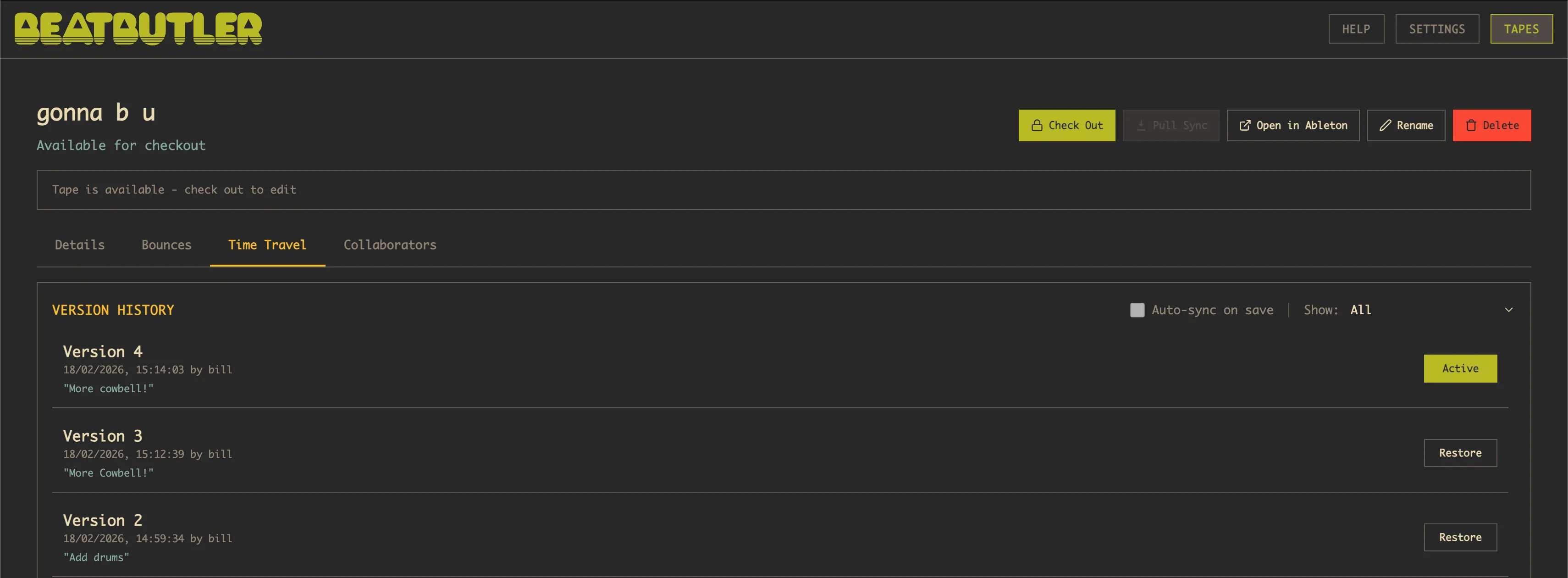
Each Ableton project lives in the cloud as a tape. Like a cassette on a shared shelf, one person checks it out to work on it and checks it back in when they’re done, so there are never conflicting versions. Everyone else can still pull the latest version and listen while it’s checked out.
- Time travel. With auto-sync on, every save in Ableton is captured. Roll back or forward to any version instantly.
- Bounces and feedback. Attach exports to any version, review them with a waveform player and metering, and leave timestamped comments. Collaborators don’t need Ableton to listen.
- Project insight. Plugin and file details for every project, plus warnings when a collaborator’s Ableton version or edition can’t open it.
- Duplicates and templates. Branch a project in a new direction, or start new sessions from your own templates.
How it’s built
Alongside running the company, I develop the desktop app: real-time collaboration, time travel, templates and crates.
- Desktop app: Electron, TypeScript and Vite. It reads each Ableton project file to record its Live version, plugins and files.
- Real time: a WebSocket API pushes check-ins, syncs and sharing changes to every collaborator’s app as they happen.
- Backend: Lambda behind API Gateway, Cognito for sign-in, S3 for project files, PostgreSQL for metadata. All of it is defined in AWS CDK, with separate dev and prod environments.
- Website: Next.js on S3 and CloudFront.
Where it started
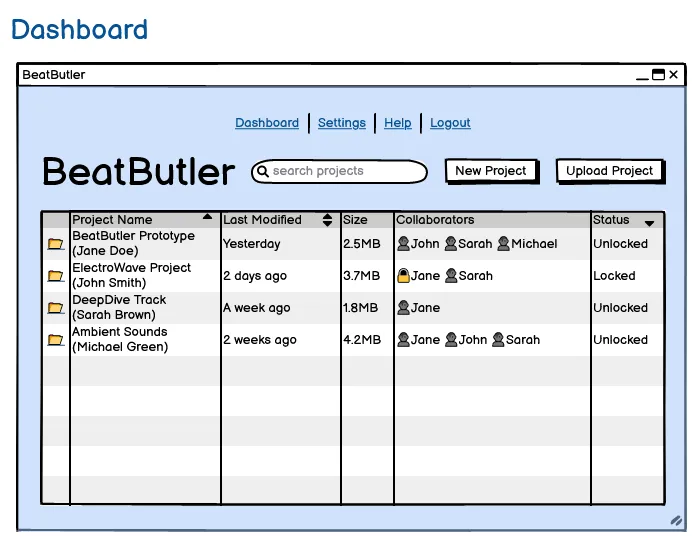
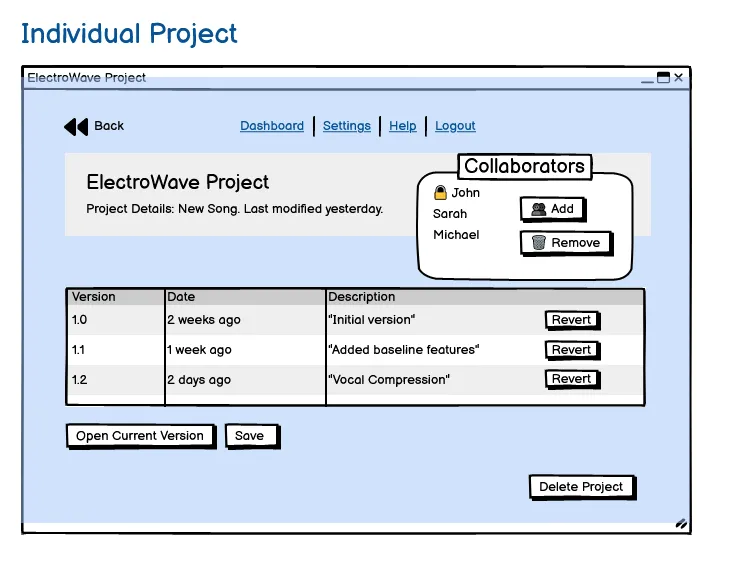
The wireframes below are from the first prototype in 2023.